

Cyber insurance has become an important part of risk management for many businesses, especially in retail and restaurant environments where distributed networks, payment systems, third-party services, and customer data can create significant cyber risk.
But purchasing cyber insurance does not guarantee that every cyber incident or resulting loss will be covered.
Coverage can be challenged when an organization’s actual cybersecurity practices differ materially from the controls represented during underwriting, required security controls are not maintained, an incident falls outside the scope of the policy, or policy conditions are not met.
For retailers and restaurant operators, this creates an important operational requirement: the cybersecurity posture described during the insurance process needs to match the security controls the organization can actually demonstrate when an incident occurs.
What Is Cyber Insurance?
Cyber insurance, often called cyber liability insurance, helps businesses recover financially after cybersecurity incidents such as ransomware attacks, data breaches, cyber extortion, and other covered events.
Depending on the policy, coverage may include:
- Incident response and forensic investigation
- Customer notification and credit monitoring
- Data recovery and system restoration
- Business interruption losses
- Cyber extortion events such as ransomware
- Legal defense and regulatory costs
Coverage varies by policy and can depend on the security controls a company maintains, the representations made during underwriting, and the specific circumstances of an incident.
Increasingly, organizations need to do more than complete an insurance questionnaire. They need to understand their security controls, maintain them consistently, and be able to demonstrate that those controls are operating as intended.
Why Cyber Insurance Claims Can Be Denied or Disputed
Several issues can create complications during a cyber insurance claim. Below are five areas businesses should understand before an incident occurs.
1. Security Controls Were Misrepresented
Cyber insurance applications commonly ask detailed questions about an organization’s cybersecurity posture.
Typical questions may include:
- Is multi-factor authentication enabled?
- Are endpoints protected with advanced security tools?
- Are backups tested regularly?
- Is there a documented incident response plan?
- Are privileged accounts subject to additional controls?
If an organization represents that specific security controls are in place but a post-incident investigation finds those controls were never implemented, were only partially implemented, or were not functioning as described, coverage may be challenged.
This makes accuracy during the underwriting process critical. Security questionnaires should reflect the organization’s actual environment rather than its intended future state.
2. Security Controls Were Not Maintained
Implementing security tools is only part of the process. Organizations also need to maintain those controls over time.
Examples of control failures may include:
- Multi-factor authentication being disabled for remote access
- Security patches not being applied within established timelines
- Endpoint protection becoming outdated or inactive
- Backups failing without monitoring or remediation
- Privileged accounts operating without appropriate oversight
- Security policies existing on paper but not being enforced operationally
This challenge can be especially significant for retailers and restaurant organizations that manage large numbers of users, endpoints, network devices, and store locations.
Security controls that work at headquarters may not always be consistently implemented across every branch, restaurant, franchise location, or remote site.
3. The Incident Was Reported Too Late
Cyber insurance policies typically include requirements governing how and when an incident must be reported.
Early notification can allow the insurer to coordinate approved incident response firms, forensic investigators, legal counsel, and other resources that may be required under the policy.
Delays in reporting can complicate the investigation, increase the financial impact of an incident, and potentially create disputes over whether policy requirements were followed.
Organizations should understand their notification obligations before an incident occurs and incorporate those requirements into their incident response plan.
4. The Loss Falls Outside the Policy
Cyber insurance policies are not identical, and coverage can vary significantly between carriers and policy forms.
Certain types of losses may require specific endorsements, may carry lower sublimits, or may be excluded altogether.
Examples can include:
- Social engineering fraud
- Business email compromise
- Payment fraud
- Funds transfer fraud
- Vendor or supply chain incidents
- Technology provider outages
Retail and restaurant businesses often depend on third-party payment processors, SaaS platforms, delivery applications, point-of-sale systems, cloud providers, managed service providers, and other vendors.
Those dependencies can introduce additional cyber risk and additional insurance considerations.
5. The Business Cannot Demonstrate Its Security Practices
Cybersecurity controls are more valuable when they are both implemented and documented.
During a claim investigation, organizations may be asked to demonstrate how security controls were configured, monitored, maintained, and enforced.
Relevant documentation may include:
- Security policies and procedures
- Asset inventories
- Access control records
- Multi-factor authentication configurations
- Patch management records
- Endpoint protection reports
- Backup verification and restoration testing
- Vulnerability management records
- Incident response procedures
- Security awareness training records
Without clear documentation, it can be difficult for an organization to demonstrate that required controls were operating as expected at the time of an incident.
Cyber Threats Facing Retail and Restaurant Businesses
Retailers and restaurant brands remain attractive targets because they operate distributed environments, process payment transactions, rely heavily on third-party systems, and often support large numbers of employees across many locations.
Several threat categories are especially relevant to multi-site organizations.
Social Engineering Attacks
Many cyber incidents begin with phishing, impersonation, credential theft, or other forms of social engineering.
Attackers may target help desk personnel, store managers, finance teams, executives, or employees who have access to sensitive systems.
Because these attacks exploit business processes and human behavior, they can sometimes bypass traditional technical security controls.
AI-Driven Cyber Attacks
Artificial intelligence is changing how attackers conduct phishing, impersonation, reconnaissance, and fraud.
Attackers can use AI to generate more convincing phishing messages, automate reconnaissance, create realistic voice impersonations, and scale social engineering campaigns more efficiently.
For businesses, this makes identity verification, employee awareness, and strong authentication controls increasingly important.
Ransomware Targeting Retail Operations
Ransomware remains a significant operational threat because downtime can immediately affect revenue-generating systems.
Retail and restaurant technology environments often include:
- Point-of-sale systems
- Store networks
- Payment infrastructure
- Inventory systems
- Back-office applications
- Cloud services
- Remote support systems
- Corporate identity platforms
If attackers disrupt these systems, the impact can extend beyond IT and directly affect store operations, employee productivity, payment processing, customer service, and revenue.
How Retailers and Restaurants Can Reduce Cyber Risk
Reducing cyber risk requires more than purchasing security products. Organizations need repeatable operational processes that keep critical controls functioning across the entire environment.
Identity Security
- Require multi-factor authentication for remote access, administrative and privileged accounts, email, and other critical systems
- Protect and monitor privileged accounts
- Monitor authentication and suspicious login activity
- Remove access promptly when employees or vendors no longer require it
- Review administrative permissions regularly
Endpoint and Network Protection
- Deploy endpoint detection and response tools
- Maintain centralized endpoint security management
- Segment store networks and sensitive systems
- Maintain consistent firewall and network security policies
- Implement patch and vulnerability management processes
- Monitor security events across distributed locations
Backup and Recovery
- Maintain secure and appropriately isolated backups
- Monitor backup jobs for failures
- Test restoration procedures regularly
- Document recovery priorities for critical systems
- Include disaster recovery planning in business continuity efforts
Incident Response Planning
- Document incident response procedures
- Define breach notification and escalation workflows
- Identify internal and external response contacts
- Understand cyber insurance notification requirements
- Conduct tabletop exercises with leadership and technical teams
Security Documentation
- Maintain current asset inventories
- Document security policies and technical controls
- Track patching, vulnerability remediation, and endpoint protection
- Conduct periodic risk assessments
- Maintain evidence that security controls are functioning as intended
These practices can reduce the likelihood and impact of a cybersecurity incident while also helping organizations demonstrate a more mature and defensible security posture.
How an MSSP Can Support Cyber Insurance Readiness
Managed security service providers can help organizations turn cybersecurity requirements into repeatable operational practices.
Rather than treating cybersecurity as an annual insurance questionnaire, businesses can continuously monitor controls, identify gaps, document security practices, and maintain evidence of how their environment is being protected.
An MSSP may support areas such as:
- Continuous security monitoring
- Endpoint protection management
- Vulnerability management
- Identity and access security
- Network security monitoring
- Incident detection and response
- Patch and configuration management
- Security reporting and documentation
- Risk assessments and technical reviews
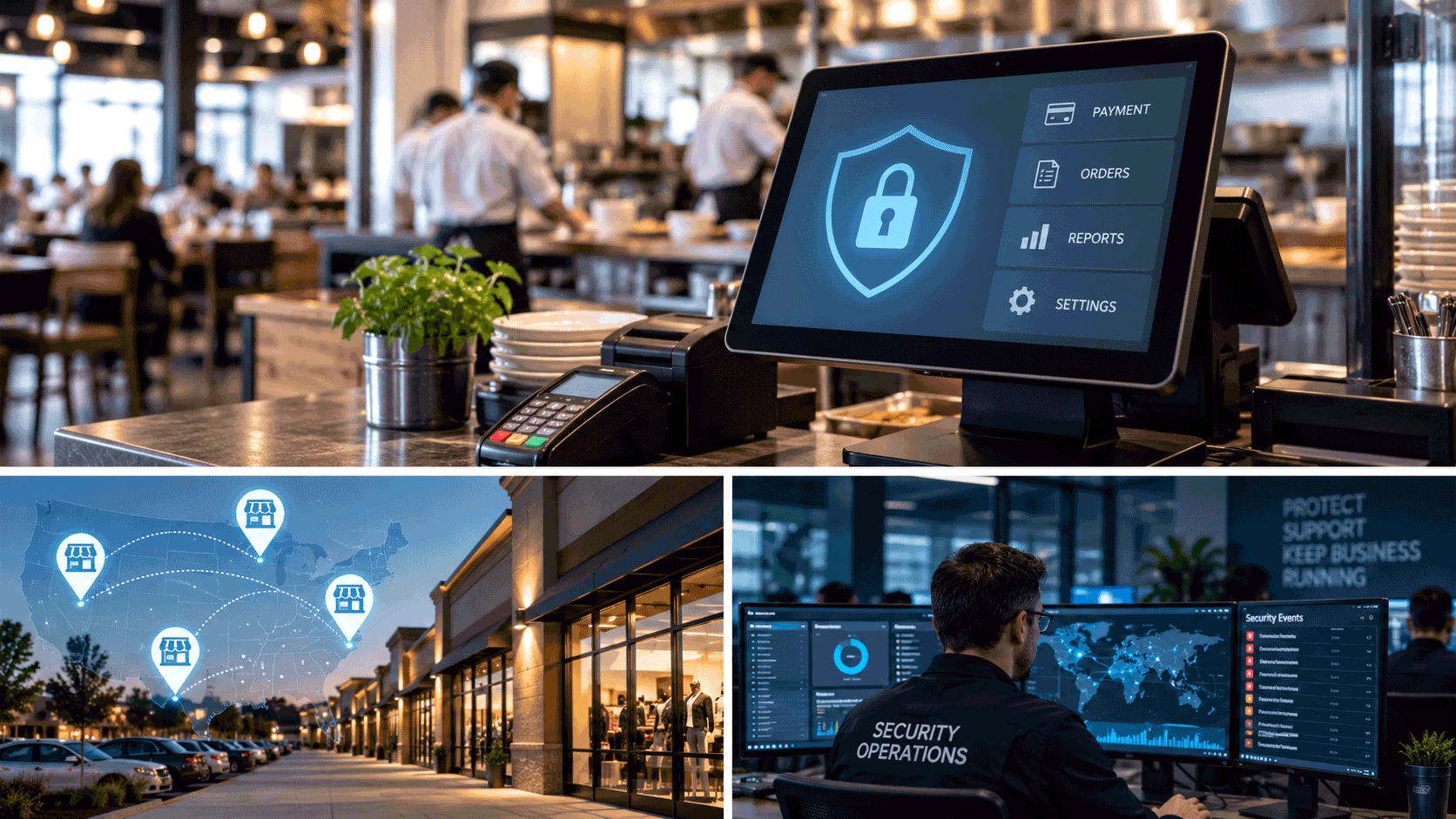
For multi-site retailers and restaurant organizations, centralized security operations can also help improve consistency across locations.
That consistency matters because cyber risk is often determined by the weakest point in a distributed environment, whether that is an unprotected endpoint, an unmanaged remote-access account, an outdated firewall configuration, or a backup process that is not being monitored.
Cyber Insurance Should Complement Security, Not Replace It
Cyber insurance can be an important component of a broader risk management strategy, but it should not be treated as a substitute for cybersecurity.
The strongest position for an organization is to understand the controls represented during underwriting, verify that those controls are actually implemented, maintain them consistently, and document how they are being managed.
For retailers and restaurants operating across many locations, this requires coordination between leadership, IT teams, security providers, insurance brokers, and other business partners.
When security operations and insurance requirements are aligned, businesses are better positioned to reduce cyber risk, respond effectively when incidents occur, and demonstrate the cybersecurity practices they have put in place.
About Secured Retail Networks
Secured Retail Networks (SRN) provides network consulting, cybersecurity, and managed services for distributed retail, restaurant, hospitality, and education organizations.
SRN designs, deploys, and supports secure network infrastructure that helps multi-site businesses remain connected and protected.
In addition to managed services, SRN performs professional services reviews and technical assessments that evaluate network architecture, security controls, and operational readiness.
These assessments help organizations identify gaps, strengthen cybersecurity posture, and ensure infrastructure is designed to support reliable operations across every location.
Cyber insurance policies and coverage requirements vary. This article provides general cybersecurity information and is not legal, insurance, or coverage advice. Organizations should review specific requirements with their insurance broker, carrier, and legal counsel.


